

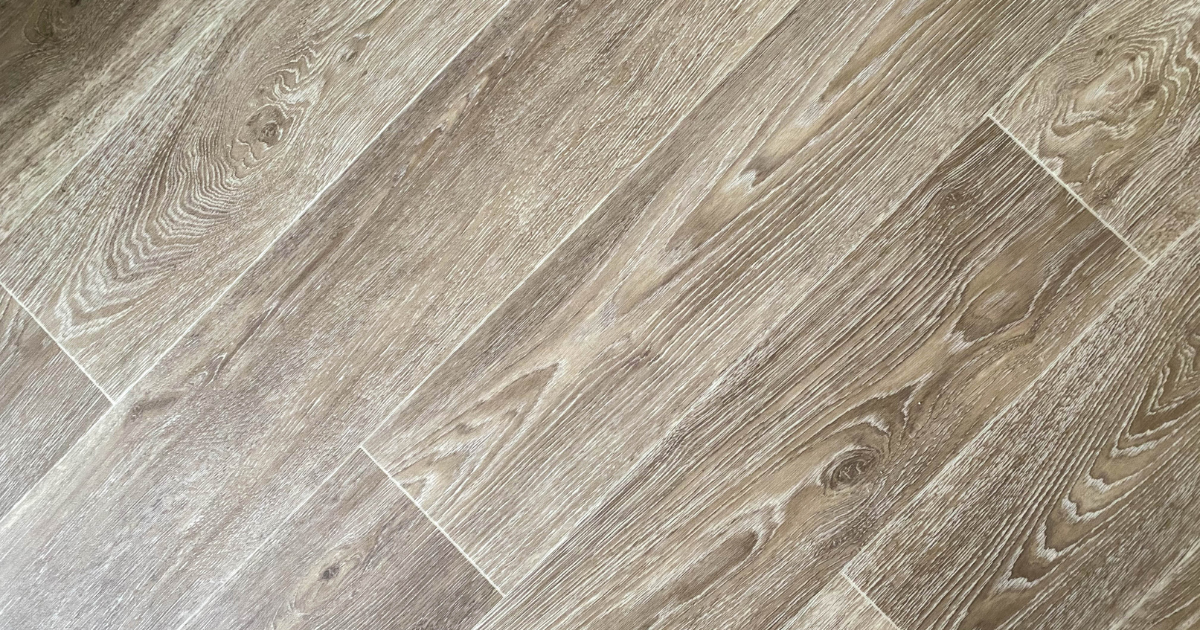
WPC and SPC are both rigid-core luxury vinyl with a waterproof core, and neither is simply the better floor. The choice comes down to your room and your subfloor. SPC, which stands for Stone Plastic Composite, has a dense stone-based core that stays put when temperatures swing and shrugs off dents. WPC, or Wood Plastic Composite, has a thicker foamed core that feels warmer, softer, and quieter underfoot. Same waterproof promise, two different feels, and the right pick depends on where the floor is going.
At Floor Covering Warehouse, we've helped Stamford homeowners sort through rigid-core vinyl since long before the acronyms showed up on sample tags. Here's how the two cores actually differ, and how to match one to each room in your house.
What "Rigid Core" Actually Means
Rigid core is luxury vinyl built around a stiff polymer core that won't swell when it gets wet. The Resilient Floor Covering Institute (RFCI), the U.S. trade group for vinyl and other resilient floors, defines rigid-core flooring as modular planks or tiles with a rigid polymeric core, a printed decorative surface under a clear protective wear layer, and an optional soft pad attached to the bottom at the factory. That description covers both WPC and SPC, because the two are just different recipes for that core.
Both cores are also held to the same yardstick. ASTM International, the organization that writes the technical standards most flooring is tested against, publishes ASTM F3261 as the specification for resilient flooring with a rigid polymeric core, and it checks properties like dimensional stability, indentation resistance, wear, and reaction to light and chemicals. So WPC and SPC pass the same kind of testing. What separates them is density, and density decides almost everything a homeowner will actually notice.
WPC: The Foamed Core That Feels Softer
WPC uses an expanded, foamed polymer core, which the RFCI describes as light in weight with underfoot comfort and good sound absorption. The foaming agents whipped into the polymer make the core thicker and a little cushioned, so a WPC floor feels warmer on bare feet and quieter when you walk across it. That extra thickness also gives manufacturers room to press deeper surface textures, which is part of why some of the most convincing wood looks sit on a WPC core.
The trade-off comes from the same foam. A less dense core dents more readily under a heavy point load like a refrigerator foot or a piano caster, and it moves more when it heats up. WPC is the more comfortable floor to stand on and the more forgiving one over a slightly imperfect subfloor, which is why it lands most often in bedrooms, and in living rooms where comfort matters more than punishment.
SPC: The Stone Core That Stays Put
SPC uses a solid, ultra-dense core, a blend of polyvinyl chloride and finely ground limestone with no foaming agents at all. The RFCI credits that solid core with greater resistance to indentation, improved dimensional stability, and better temperature stability than WPC. In plain terms, an SPC plank is harder, thinner, and far less likely to expand or contract when a room heats up and cools down. It takes a dropped pan or a stiletto heel better, and it holds its shape in a room that bakes in afternoon sun.
The density cuts the other way, too. A harder, thinner core feels less cushioned and sounds a touch louder underfoot, and because it doesn't compress, it telegraphs bumps and dips in the subfloor more honestly than a thick WPC plank would. SPC rewards a flat, well-prepped subfloor, and it pays that prep back with a floor that barely moves.
WPC vs. SPC at a Glance
Property | WPC (Wood Plastic Composite) | SPC (Stone Plastic Composite) |
|---|---|---|
Core | Foamed polymer, wood-based fillers | Solid polymer, ground limestone |
Density | Lower, thicker plank | Higher, thinner plank |
Feel underfoot | Warmer, softer, quieter | Firmer, cooler, louder |
Dent resistance | Good | Better |
Temperature stability | Moves more with heat | Very stable |
Subfloor imperfections | Hides minor ones | Shows them; wants a flat base |
Best fit | Bedrooms, comfort-first rooms | Sunrooms, kitchens, basements, high traffic |
The Real Deciding Factor Is the Room and the Subfloor
The room usually makes the choice for you. A sunroom, a space with big south-facing windows, a three-season porch, or any room without steady climate control puts heat stress on a floor, and that's SPC territory, because its stone core barely reacts to temperature. Rigid vinyl of either kind will expand and can buckle under enough heat, which is why manufacturers tell you to keep blinds or shades on large sun-struck windows, but SPC gives you the wider margin.
Comfort points the other way. In a bedroom, or a kitchen where you stand and cook, the warmth and give of a thick WPC plank is what you feel every day, and dents are less of a worry away from heavy rolling loads. Subfloor condition is the tiebreaker. Any floating rigid-core floor needs a flat base, and most manufacturers want the subfloor flat within 3/16 inch over a 10-foot span, or 1/8 inch over 6 feet. A subfloor that misses that mark by a little favors thicker WPC, which masks small waves; a subfloor prepped truly flat lets you take advantage of everything SPC offers.
What Decides Surface Durability: The Wear Layer
The wear layer is what actually resists the scratches and scuffs you'll see day to day, and it has nothing to do with which core sits underneath. The wear layer is the clear top coat over the printed design, measured in mils, or thousandths of an inch, and a thicker one takes more abuse before it dulls. A busy household with a dog and kids wants a heftier wear layer whether the core is WPC or SPC. The commercial-rated luxury vinyl we carry runs the thickest wear layers we stock, and those products are worth a look for entryways, mudrooms, and anywhere the traffic never lets up.
Waterproof Core Is Not the Whole Waterproof Story
A waterproof core means the plank itself won't swell if water sits on top of it, and that's true of both WPC and SPC. It doesn't mean moisture under the floor is handled. Over a concrete slab, water vapor can still push up from below, so the slab gets tested before anything goes down. Installers usually let a new slab cure for about 90 days, then read the moisture inside it with an in-slab humidity probe, and most rigid-core products cap that reading at 75% relative humidity before the floor can be installed. On a floating install over concrete, a 6-mil moisture barrier typically goes down first. The plank surviving a spilled glass is one question; the whole system surviving a damp slab is another, and that one is settled by the concrete.
Questions We Get About WPC and SPC
Is SPC always better than WPC?
No. SPC is harder and more heat-stable, but WPC is warmer, quieter, and softer underfoot, and it hides minor subfloor flaws better. The better floor is the one that fits the room, which is why plenty of houses end up with both.
Which core is better for a basement?
SPC is usually the smarter basement pick. Its stone core stays dimensionally stable in a space that swings between cool and warm, and it sits well over concrete. Both cores are waterproof, but the slab underneath still needs a moisture check first, with that humidity reading kept at or below 75%.
Do rigid-core floors need separate underlayment?
Usually not. Most rigid-core planks come with a pad already attached at the factory, and stacking a second pad under one of those floors will void the warranty on many products. It's worth confirming what your product includes before you buy anything extra.
Is rigid-core vinyl safe for indoor air?
Look for a FloorScore label. FloorScore is the indoor-air-quality certification run by SCS Global Services for hard-surface flooring, and it means the product was tested and met the volatile organic compound limits of California's Section 01350 program, the benchmark most green building programs point to.
Choosing the Right Rigid-Core Floor for Your Home
Once you know whether a room needs the heat stability of a stone core or the comfort of a foamed one, the rest of the decision is color, texture, and wear layer, and that part is genuinely fun. You can browse our luxury vinyl collection to see WPC and SPC options side by side, and if you want the deeper background on why rigid core outperforms older flexible vinyl, we walked through whether rigid core is worth the investment in an earlier piece. When you're ready to match a floor to each room, request a free estimate and we'll measure your space, check the subfloor, and help you pick the core that fits how you actually live.


