

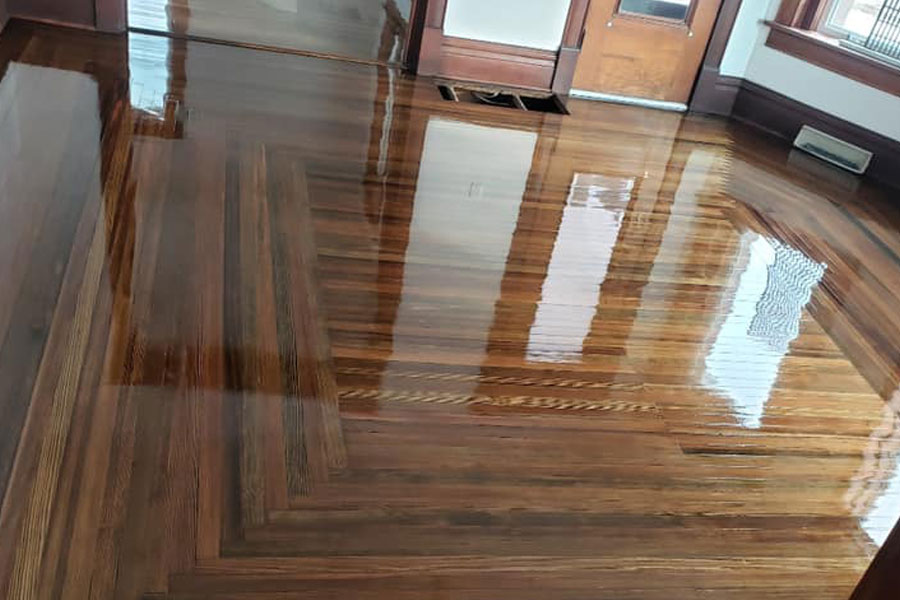
Older homes often come with hardwood that tells the story of the house. In many cases, those floors still have years of life left in them, even if they show scratches, dull finish, sun fading, or minor gaps. The real question is not whether the wood looks worn today. It is whether the boards beneath that wear are still worth saving.
That decision matters in places like Greenwich, where many older homes were built with solid wood that can outperform newer materials when it is properly restored. At Floor Covering Warehouse, we help homeowners weigh condition, cost, disruption, and long-term value before deciding which path makes sense.
When refinishing is the smarter move
Refinishing works best when the boards are structurally sound but the surface has taken a beating over time. If the floor has scratches from pets, light staining, finish wear in traffic lanes, or a color that no longer fits the room, sanding and recoating can bring it back without changing the character of the home. That is especially true for older oak floors, which were often installed thick enough to handle multiple sanding cycles.
It also preserves details that are hard to recreate. Original strip flooring, narrower plank layouts, and wood species common in older construction can give a room a sense of proportion that newer products do not always match. If you are trying to maintain that look, reviewing different hardwood species and styles can help clarify what is original and what a replacement would change.
Signs replacement is the better investment
Some floors are too far gone for refinishing to make financial sense. Deep pet stains that have soaked through the wood, repeated water damage, severe cupping, soft spots, or boards that have been sanded down too many times usually point toward replacement. The same is true when different repairs over the years have left patchwork areas that no longer blend.
In those cases, replacement gives you the chance to solve more than appearance. You can correct subfloor issues, improve stability, and choose a construction better suited to the home’s current conditions. In older houses with seasonal movement, many homeowners prefer engineered hardwood options because they handle humidity swings more predictably than some traditional installations. If the goal is to keep a classic look while reducing future movement, white oak flooring is often high on the list for good reason.
The house should guide the decision
The right answer depends on the floor, but it also depends on the house around it. Older homes in coastal Fairfield County deal with humidity shifts, winter dryness, and years of settling. Those conditions can open gaps, stress fasteners, and exaggerate uneven wear. A floor that looks tired may still be a good refinishing candidate, while one that looks acceptable at first glance may hide moisture problems underneath.
That is why product selection and installation planning matter just as much as the visible finish. Looking through completed projects in our work gallery can help you see how restored and replaced wood floors perform in real homes, not just showroom displays. It also helps homeowners in Stamford and Greenwich think beyond stain color and focus on proportion, plank width, and overall fit.
What homeowners often overlook
Many people compare refinishing and replacement only by upfront price. That misses the bigger picture. Refinishing usually costs less and keeps the original material in place, but replacement can deliver better results when the floor’s foundation is compromised or the layout no longer works with the home. The best choice is the one that solves the actual problem, not just the visible one.
Floor Covering Warehouse has served local homeowners since 1934, and that long view matters with older properties. Some floors deserve restoration. Others need a fresh start. A careful evaluation will tell you which is which.
If you want expert guidance before committing either way, schedule a design consultation and get a professional opinion on what your hardwood can realistically become.


