
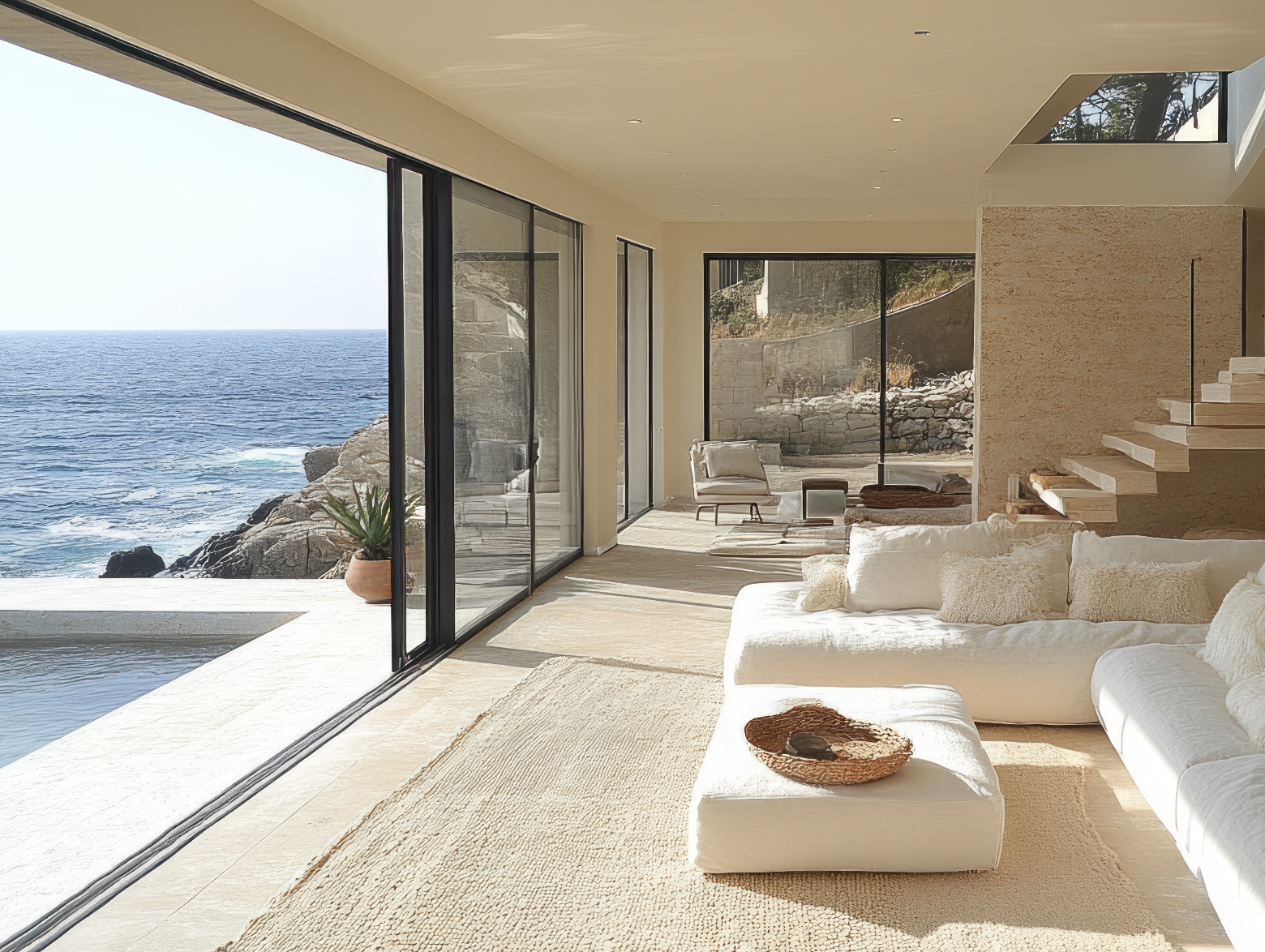
Living near the water changes how a floor performs. Salt air, damp shoes, humid summers, and the occasional wind-driven storm can all push a material harder than it would be tested in a drier inland setting. For homeowners in Rye and Greenwich, that usually means the right floor is not just about color or style. It is about choosing something that stays stable, cleans up easily, and still looks right in a well-designed home.
Why coastal moisture changes the flooring decision
Moisture rarely shows up as one dramatic event. More often, it builds slowly through seasonal humidity, condensation near entry doors, and repeated wet traffic from patios, pools, and mudrooms. That is where luxury vinyl earns its place. A well-made waterproof luxury vinyl floor gives you a surface that handles daily splashes and damp conditions without the swelling, edge lift, or staining that can affect less resilient materials.
Construction matters just as much as the wear layer. In homes where subfloor conditions are less predictable, especially on lower levels, rigid-core luxury vinyl plank offers added stability underfoot and helps bridge minor imperfections better than softer constructions. That makes it a practical fit for busy households that want a wood look without the maintenance concerns that often come with real wood in moisture-prone spaces.
The look homeowners want, with less risk
Many coastal homeowners still want floors that feel warm and architectural rather than overly synthetic. That is why the best-performing options today focus on visual realism as much as durability. Wood-look luxury vinyl can deliver long plank visuals, textured surfaces, and natural color variation that work well in traditional homes as well as cleaner transitional interiors.
At Floor Covering Warehouse, that balance between performance and design is central to the selection process. A floor needs to suit the home, but it also needs to suit the way people actually live in it. In a shoreline environment, that usually means thinking beyond the showroom sample and considering how light, moisture, and traffic will affect the space over time.
Where hardwood still makes sense
Hardwood is not off the table. It simply needs to be used thoughtfully. In drier upper-level rooms, dining areas, or formal living spaces, engineered hardwood can be a smarter choice than solid planks because its layered construction handles humidity swings more effectively. That added dimensional stability is especially useful in Southern New England, where winter heating dries the air and summer moisture brings it back fast.
Species and finish also influence long-term performance. Homeowners who want a classic look with enough grain character to soften wear often gravitate toward white oak hardwood, which pairs well with coastal palettes and holds up visually in active homes. The key is putting wood in the right rooms and using more water-tolerant materials where the environment is working against it.
Full-service guidance matters more than ever
Moisture-smart flooring is rarely a one-product conversation. It involves room use, subfloor condition, installation method, and how one area of the home connects to the next. That is where Floor Covering Warehouse stands apart. As a third-generation family-owned business serving the region since 1934, the team understands that good flooring decisions come from matching materials to real conditions, not from chasing trends.
For homeowners comparing options across living spaces, entry points, and lower levels, it helps to see samples where the floor will actually live. You can schedule a shop-at-home flooring consultation to compare colors, textures, and constructions in your own light and with your home's actual moisture patterns in mind.
If you are planning a coastal update and want a recommendation that fits both the house and the climate, start with a design consultation from Floor Covering Warehouse.


