

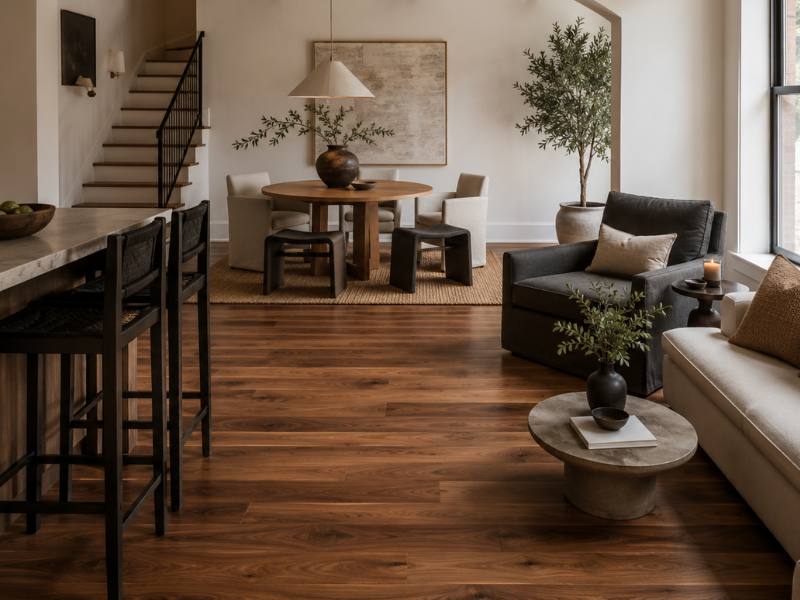
Open-concept rooms do a lot of work. One space may need to handle cooking, dining, lounging, entertaining, and the daily traffic that comes with all of it. That flexibility is appealing, but it also creates a design challenge: without walls to define each zone, a large room can feel unfinished or visually scattered. A well-sized custom rug helps solve that problem with warmth, softness, and a clearer sense of layout.
Why standard rug sizes often fall short
In open layouts, scale matters more than most homeowners expect. A rug that looks generous in a showroom can feel undersized once it sits beneath a sectional, coffee table, and accent chairs. When the dimensions are off, furniture floats instead of feeling grounded, and the room loses the structure that makes an open plan feel intentional.
That is where custom area rugs make a practical difference. Instead of forcing your room to fit an off-the-shelf size, you can build around the footprint you actually have. This approach works especially well when a seating area blends into a dining space or when you need a runner to connect adjacent zones without breaking the visual flow.
Carpet choice shapes how the room performs
The best rug for an open-concept space is not just about color. Fiber, texture, and pattern all affect how the room wears over time. In households with kids, pets, or frequent guests, softer products that also resist staining tend to hold up better in central living areas where spills and traffic are hard to avoid.
For many homeowners, SmartStrand carpet styles offer that balance. Triexta fiber handles common messes without relying on heavy topical treatments, which makes it a smart material for a rug placed between a kitchen and family room. If you want a tailored look with a little more visual movement, patterned carpet options can help define a conversation area while hiding day-to-day wear better than a flat solid.
A custom rug should connect the room, not compete with it
The strongest open-plan designs use rugs to create order. In a large home in Greenwich, for example, a broad rug can anchor the main seating area while allowing the surrounding flooring to frame the space. In a more compact layout, the right shape can make the room feel wider, calmer, and easier to furnish because each section has a clearer purpose.
Texture plays a big role here. A dense textured carpet selection adds comfort underfoot without looking too formal, while wool carpet styles bring natural depth and a more refined finish for rooms where design detail matters. The goal is not to fill empty square footage. It is to create better proportion, better acoustics, and a more cohesive room.
The benefit of a full-service process
Custom work only succeeds when measurements, edging, and material selection are handled carefully. Floor Covering Warehouse has been helping local homeowners make those decisions since 1934, and that experience matters when a rug needs to fit a room precisely rather than approximately. A few inches can change how furniture sits and how the whole layout reads.
That is also why seeing samples in the room itself helps. With shop-at-home flooring service, you can compare color and texture against your upholstery, wall paint, and natural light before making a final choice. For homeowners in Stamford or Bridgeport, that kind of in-home guidance often leads to a result that feels quieter, more balanced, and better suited to the space.
A custom rug can do more than soften a room. It can organize an open floor plan, improve comfort, and make the entire space feel finished. If you want help choosing the right material, size, and border detail, schedule a design consultation with Floor Covering Warehouse.


